
![Tired of Managing Property? Here’s Why Landlords Decide to Sell House in [market_city]](https://image-cdn.carrot.com/uploads/sites/69614/2026/02/for-04.jpg)
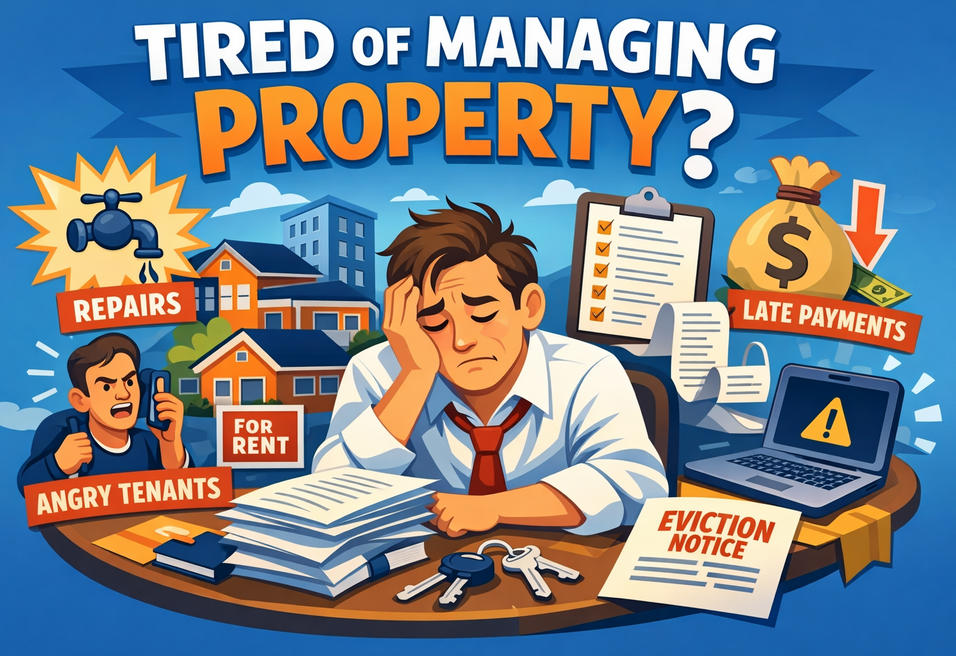
If you’ve been juggling late-night tenant texts, surprise maintenance emergencies, and a stack of unpaid invoices, you’re not alone. Many landlords reach a point where the day-to-day grind stops being worth the monthly rent checks. This page is for the landlord who’s tired, fed up, or simply ready for a cleaner, less stressful chapter. I’ll walk you through the honest reasons owners decide to sell — not in bullet points, but as a straight conversation. You’ll find practical thinking, common patterns, and how a streamlined solution can help move on faster.
The emotional and financial weight of being a landlord
Owning rental property can feel like having two full-time jobs. On one hand you’ve got the investment logic — equity, appreciation, tax benefits. On the other hand there’s the human reality: tenants with problems, contractors who don’t show, and surprise expenses that eat into profit. When dealing with repeated tenant turnover, eviction processes, or long stretches of vacancy, even a property that once made sense financially can become a constant source of stress. The math on paper doesn’t always match the emotional toll in real life.
For many, the trigger to sell is cumulative rather than single-event driven. It’s not just the leaky roof or the rent that’s a few months late; it’s the erosion of time, peace of mind, and the flexibility to do other things. Landlords who used to manage their own properties find that the work creeps into evenings and weekends. Those who hired property managers discover management fees and misaligned expectations. Eventually there’s a realization: the return on time invested is simply too low.
Things that push landlords to the “sell” decision
Some landlords make the decision quickly after a big event — a major repair, a contentious eviction, or a personal life change like a move or divorce. Others come to the decision gradually, after years of small irritations. A common pattern is change in life priorities. Maybe you’re approaching retirement and want steady, low-effort income rather than the rolling unpredictability of repairs and tenant turnover. Or perhaps the market moved and you can cash out at a comfortable profit and simplify your life.
There’s also a business-side reality: market cycles. When demand is high in a particular area, selling can free up capital that you can redeploy elsewhere with less hassle. Conversely, if a neighborhood declines, selling might stop further losses and let you reallocate funds into something less hands-on. Whatever the catalyst, the decision to sell often comes down to a single question: is this property still helping me reach my goals, or is it holding me back?
The practical reasons — repairs, regulations, and tenants
Older homes come with older problems. Plumbing that needs replacing, roofs with limited life left, electrical systems that won’t pass modern codes — these are expensive and often unpredictable. Add local regulation changes or new landlord-tenant laws and you’ve got an evolving compliance burden. Some landlords simply don’t want to manage the paperwork or fight new inspections.
Tenant issues are another big piece of the puzzle. Dealing with late rent, property damage, or the lengthy legal processes involved with removing a problematic tenant drains time and energy. For some, the emotional cost of repeatedly handling these conflicts is the tipping point. Selling offers a clean break: transfer responsibility and move on.
What selling looks like today (and options that don’t involve a realtor)
Selling a rental property doesn’t have to mean a long listing, open houses, and months of uncertainty. There are multiple avenues — traditional listing with a real estate agent, selling to an investor, or working with a company that buys houses directly. Each option has trade-offs in price, speed, and convenience. If you value speed and certainty more than maximum market price, a direct sale might be appealing. If you want top dollar and can wait, listing could make sense.
Some landlords choose a hybrid approach: list the property while also exploring cash-buyers so they have options. Others reach out to a local solutions buyer for a quick valuation and to understand the timeline. Whichever route you choose, the key is clarity. Know what matters to you most: speed, convenience, net proceeds, or minimizing headaches.
How to decide — questions worth asking yourself
Before you commit to selling, take a moment to assess practical and emotional factors. How much time do you spend on the property each month? What are realistic repair costs in the near future? Are you prepared to manage the property long-term, or would you rather cash out and simplify? Think about opportunity cost — is your capital stuck in a property that needs more attention than it returns, preventing you from pursuing other goals? If the answer is yes more often than no, selling becomes an attractive, rational choice.
If you’re leaning toward selling but worry about getting confused by options, talk to multiple types of buyers. Ask for clear, no-pressure estimates and timelines. Honest buyers will explain what they will do next — whether they’ll resell, renovate, or hold — and how that affects the offer they make.
A smoother exit — what to expect working with a direct buyer
Many landlords who want a quick exit prefer a solution that reduces calls, fix-ups, and waiting. A direct sale to a company or investor can remove the need for repairs, simplify paperwork, and close on a timeline that works for you. If you need flexibility, some buyers offer leaseback or delayed closing options so you can move on your terms. It’s also common to get a firm offer after a short inspection and a clear list of what will be handled post-sale.
If you want an approachable first conversation, reach out and describe the property, recent maintenance history, and your reason for selling. Reputable buyers will listen to your story and lay out a plain-language plan. If you prefer more formal steps, you can request documentation and references.
When landlords decide to sell and prioritize a fast, certain closing over squeezing every last dollar out of the market, they unlock time, reduce stress, and gain the freedom to pursue other priorities. That’s why many owners eventually choose to move on.
If you’d like a free, no-pressure valuation or to explore cash-sale options, reach out to Sell My House Mesa. They’ll listen to your situation and explain straightforward next steps. Or, if you prefer, you can contact Sell My House Mesa directly to compare options and timelines. Either way, when the work of managing property starts to outweigh the benefits, selling can be the practical, freeing choice that gets your life back to what matters.